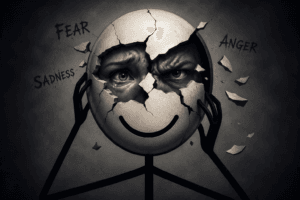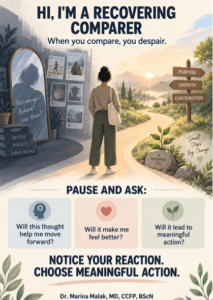

Inner peace sounds fake on paper.
it’s one of those phrases that feels too soft to survive a lab coat. Too personal. To main character energy. You can’t scan it, graph it, or download it.
And yet signs keep circling it.
Not my measuring peace itself, but by studying what consistently shows up when people say they found it.
What Researchers Look For Instead of “Peace”.
Psychologists don’t ask people to rate their inner peace on a scale of 1–10 and call it a day. They look for patterns – signals that the mind and body had shifted into a more regulated state.
Across neuroscience and behavioural psychology, calm tends to line up with:
- Reduced amygdala activation, meaning the brain is less reactive to perceived threats
- Stronger prefrontal cortex engagement, which helps override impulsive emotional responses
- Improved heart rate variability [HRV], a gold–standard indicator of nervous system flexibility
- Lower baseline cortisol, the hormone most associated with chronic stress
Long – term studies on stress regulation show that people who experience sustained call aren’t stress free – they just recover faster. their systems don’t stay stuck on high alert.
Peace, from a scientific standpoint, looks a lot like resilience d
Attention, Stillness, and the default Mode Network
Neuroscience adds another layer.
When the brain is at rest, and network called the default mode network [DMN] becomes active, this system is associated with self-reflection, memory, and – when overactive – rumination.
Studies show that practices linked to inner peace tend to quiet excessive DMN activity.less looping, less mental replay. Less constant narration of everything that went wrong.
Interestingly, this same downshift appears during moments of deep trust, surrender, or perceived safety – not just meditation.
Peace isn’t the brain shutting off.
It’s the brain no longer bracing for impact.
Peace Isn’t About Control – It’s About Safety
One finding shows up again and again across psychology: the body relaxes before the mind feels peaceful.
Polyvagal theory suggests that when the nervous system senses safety, everything changes – breathing slows, attention widens, emotional responses soften.
Which raises an uncomfortable question:
What actually makes a human feel safe enough to rest?
Science frames peace not as emotional control, but as trust placed outside the self. A kind of safety that doesn’t come from managing every variable, but from believing you don’t have to.
Science observes what happens when the nervous system finally stands down.
Faith speaks to why it might dare to.
Measured Outcomes, Unmeasured Origins
So no – inner peace can’t be measured the way blood pressure can.
But it’s effects are everywhere:
- In how quickly stress resolves.
- In how the brain processes uncertainty.
- In how the body responds to pressure.
- In how a person moves through chaos without becoming it.
Science is excellent at mapping the outcome.
It just stopped short of naming the source.
If science can map the effects of peace but not its source, where do you think that peace begins?Porges, S.W (2011), The Polyvagal Theory.