Every few years this piece of art pops back up online, and honestly, it never gets old.
You have probably seen it.
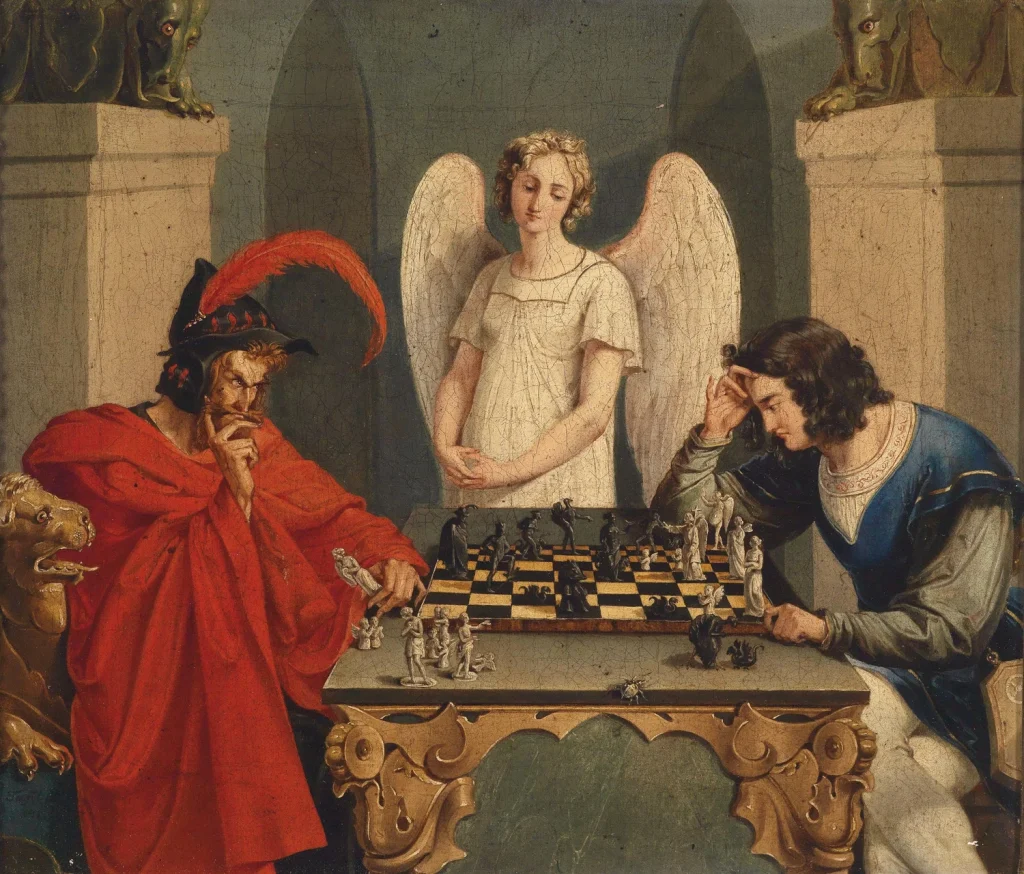
A man sits at a chessboard.
Across from him? The devil.
It’s a painting called Die Schachspieler (which just means The Chess Players), but most people call it “The Devil’s Checkmate.”. It was painted back in 1831 by German artist Friedrich August Moritz Retzsch — a Romantic-era illustrator who loved dramatic, symbolic scenes.
At first glance, it’s straightforward.
The game looks over.
The devil is relaxed, almost bored.
The man looks crushed.
End of story.
No moves left.
Total loss.
Except… not quite.
Chess players eventually took a closer look at the board and noticed something interesting.
It isn’t actually checkmate.
There is still one move left.
One tiny, easy-to-miss move that completely flips the game.
The king isn’t trapped.
The man isn’t done.
The match isn’t over.
The devil just hopes you think it is.
And once you know that, the whole painting changes.
It’s no longer about defeat.
It’s about perspective.
How often do we do this in real life?
We glance at the situation and decide:
“This is over.”
“I ruined everything.”
“There’s no way out.”
We are quick to give up and quit.
But what if we just haven’t looked closely enough?
Artists love doing this—hiding meaning inside meaning.
Hope in the shadows.
Light tucked into the corners.
This painting quietly asks:
What if you’re not stuck?
What if you’re just not seeing clearly yet?
Maybe the move is still there.
Small.
Subtle.
Easy to miss.
Not dramatic.
Not flashy.
Just possible.
And sometimes, that’s all you need.
Not a miracle.
Not a reset.
Just one move.