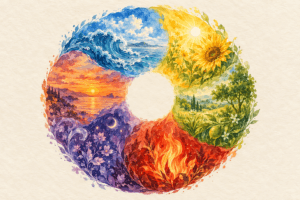

Trauma doesn’t always end with the person who experienced it—it can influence how families cope, connect, and respond to stress across generations.
Generational trauma refers to the ways the effects of difficult or traumatic experiences can influence subsequent generations. Family beliefs, coping strategies, communication styles, and relationship patterns may be learned and repeated, often unintentionally. While these patterns can feel deeply ingrained, becoming aware of them creates an opportunity to understand their origins and begin creating healthier patterns.
You may find yourself frustrated by patterns you can’t seem to break—struggles with anger, codependency, addiction, low self-esteem, perfectionism, or difficulty regulating your emotions. You may wonder why you continue to react in certain ways, even when you recognize these patterns are no longer serving you. Sometimes, the answer goes beyond our individual experiences. The ways we cope, relate to others, and view ourselves can be influenced by what we learned and experienced within our families.
Recognizing the Patterns
Breaking generational cycles often begins with curiosity. Consider the messages you received growing up about emotions, relationships, conflict, success, or vulnerability. Perhaps emotions were rarely discussed, conflict was avoided, or achievement became closely connected to self-worth. Coping strategies that once helped previous generations navigate difficult circumstances may continue to influence families even when they are no longer helpful.
Understanding Without Blaming
Exploring generational patterns does not have to mean blaming parents or caregivers. They may have developed their own ways of coping based on their experiences, environments, and the messages they received growing up. Understanding this can allow us to have compassion for previous generations while still acknowledging how certain patterns have affected us.
Creating New Patterns
Awareness creates an opportunity to respond differently. This might involve communicating emotions more openly, setting boundaries, challenging unhelpful beliefs, developing healthier coping strategies, or changing how you approach conflict. Therapy can also provide a space to explore where these patterns originated and how they continue to influence your relationships and sense of self.
Healing from the effects of generational trauma does not mean erasing the past or rejecting your family. It means becoming more intentional about what you want to carry forward and what you are ready to change. By creating healthier patterns, healing can become part of what we pass forward, too.
Written by: Carol Mansour, Registered Psychotherapist (Qualifying)
References
American Psychological Association. (2023). Intergenerational trauma. In APA dictionary of psychology. APA Dictionary of Psychology
Danieli, Y. (Ed.). (1998). International handbook of multigenerational legacies of trauma. Springer. Springer
Lehrner, A., & Yehuda, R. (2018). Trauma across generations and paths to adaptation and resilience. Psychological Trauma: Theory, Research, Practice, and Policy, 10(1), 22–29. https://doi.org/10.1037/tra0000302 PubMed
Sangalang, C. C., & Vang, C. (2017). Intergenerational trauma in refugee families: A systematic review. Journal of Immigrant and Minority Health, 19, 745–754. PubMed Central (PMC)
Sangalang, C. C., Jager, J., & Harachi, T. W. (2020). Crossing borders: A systematic review identifying potential mechanisms of intergenerational trauma transmission in asylum-seeking and refugee families. European Journal of Psychotraumatology, 11(1), 1790283. PubMed Central (PMC)
Yehuda, R., & Lehrner, A. (2018). Intergenerational transmission of trauma effects: Putative role of epigenetic mechanisms. World Psychiatry, 17(3), 243–257. https://doi.org/10.1002/wps.20568 Wiley Online Library