Let’s be real for a second. This is one of those questions that can stop you mid-thought, especially when life gets heavy. You watch the news, you see suffering, you witness cruelty, and somewhere in the back of your mind, the question comes up: “Why does any of this exist?”
It’s not a comfortable question. But it’s an honest one. And honest questions deserve honest conclusions.
So, What Does Science Tell Us?
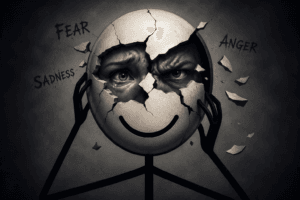
Human beings are, at their core, biological creatures shaped by evolution. And here’s the uncomfortable truth, a lot of what we call “evil” has deep evolutionary roots. Aggression, tribalism, deception, self-interest, these weren’t faults in early humans, they were features, and survival tools. The brain’s threat-response system, buried in the human mind, is ancient and fast. It doesn’t stop to philosophize, it reacts, and in the early days of our species, that reaction is what kept us alive.
Neuroscience backs this up. Studies show that fear, in-group loyalty, and a tendency to dehumanize “outsiders” are hardwired responses. We are capable of incredible compassion, but we’re equally capable of cruelty, especially when we feel threatened or when our tribe is involved. The same brain that writes poetry and raises children can, under the right conditions, rationalize terrible things.
Psychology adds another layer…trauma breeds trauma. Children raised in chaos and violence often grow up to perpetuate it, not because they’re inherently broken, but because the brain adapts to its environment. Evil, in many cases, isn’t born, it’s learned, modeled, and passed down like an inheritance.
And then there’s entropy, the universe’s natural tendency toward disorder. Nothing stays perfect, systems break down, things decay. There’s a reason science sometimes describes the cosmos as fundamentally indifferent. Nature doesn’t choose good or evil just like a hurricane doesn’t have malice, or a disease having intent. Chaos is simply part of how the physical world operates.
Science alone doesn’t quite close the loop!
If we’re just animals running on evolved instincts in an indifferent universe, then “evil” shouldn’t even be a meaningful concept. It would just be… behavior, or neutral. Yet every human culture in history has developed some version of moral code. Every society has drawn a line between right and wrong, so we feel that evil is real. That moral intuition has to come from somewhere.
This is where a lot of people, across centuries and cultures, have turned to God.
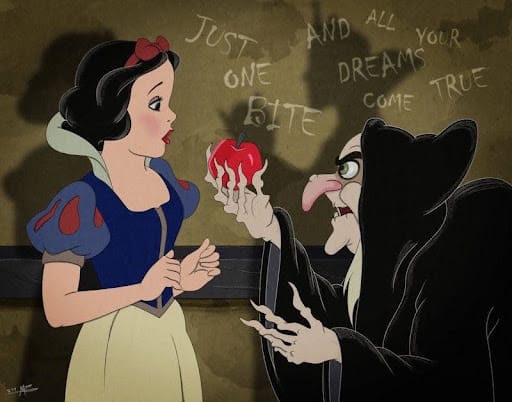
The Christian understanding of evil doesn’t shy away from the question; it actually leans into it. The idea is this: God didn’t create robots, He created beings with genuine freedom, and genuine choice. And real freedom means the real possibility of choosing wrong. Evil, in this framework, isn’t something God designed, it’s the shadow that forms when beings with free will turn away from love, from truth, from each other.
It’s not a perfect answer that erases all the pain, but it’s a profoundly human one. It means your choices matter, it means love is real, not just a chemical reaction. It means that when something feels deeply wrong, when you witness injustice and your gut twists, that instinct is pointing at something true.
There’s also this: the Christian story doesn’t promise a world without suffering; it promises presence within it. The cross itself is a symbol of God entering into the worst of human experience, not watching from a distance, but showing up in the middle of it.
So why is there evil in the world?
Partly because of biology, partly because of trauma and broken systems. Partly because of the chaos baked into a physical universe. And partly, maybe, because love and freedom are inseparable, and you can’t have one without the risk of the other.
The question doesn’t have a clean answer, but asking it keeps us honest, keeps us searching, and keeps us human.
References:
Bhatt, Siddharth, et al. “The Neurobiology of Human Aggressive Behavior: Neuroimaging, Genetic, and Neurochemical Aspects.” Progress in Neuro-Psychopharmacology and Biological Psychiatry, vol. 106, 2021, p. 110059. ScienceDirect, www.sciencedirect.com/science/article/abs/pii/S0278584620303754.
Lewis, C. S. The Problem of Pain. Geoffrey Bles, 1940.