Most people think nutrition is about food: what to eat, what to avoid, what’s healthy, and what isn’t. But this way of thinking misses something more fundamental. Nutrition isn’t really about food*—*it’s about how your body uses what you eat. Every time you eat, your body isn’t just taking in calories. It’s receiving raw materials that need to be broken down and used in different ways.
At the most basic level, everything you eat is made up of three main components: carbohydrates, fats, and proteins. These nutrients fuel your body and are needed in large amounts to sustain you, which is why they are often referred to as macronutrients (macro = large).
Carbohydrates are your body’s quickest and preferred source of energy. They are made up of long chains of glucose (sugar). When you eat them, they’re broken down into sugars that enter your bloodstream and can be used fairly quickly. This is why foods like fruit, rice, bread, and whole grains can give you a noticeable boost in energy not long after eating. When you’re not eating enough carbohydrates, you may feel tired and low on energy.
Fibre is a type of carbohydrate that functions a little differently. While most carbohydrates are broken down into sugar to give you energy, fibre plays a big role behind the scenes. Fibre cannot be fully digested or broken down, so it moves through your digestive system and helps you feel full. Fibre also supports a healthy digestive system, resulting in the kind of bowel movement your doctor would quietly applaud.
Fats are more energy-dense and slower to process. They provide longer-lasting energy, support hormone function, and help your body absorb certain nutrients. You’ll find them in foods like oils, nuts, dairy, and meat.
Proteins are different. Instead of mainly being used for energy, they act as building blocks. Your body uses protein to repair tissue, support muscle growth and maintenance, and maintain overall structure and function. Protein can be found in both animal and plant sources. Meat, poultry, fish, eggs, beans, legumes, dairy, and tofu are all excellent sources of protein.
All three components*—carbohydrates, fats, and proteins—*are essential. Your body uses them in different ways, but they all play a vital role in keeping you strong and healthy.
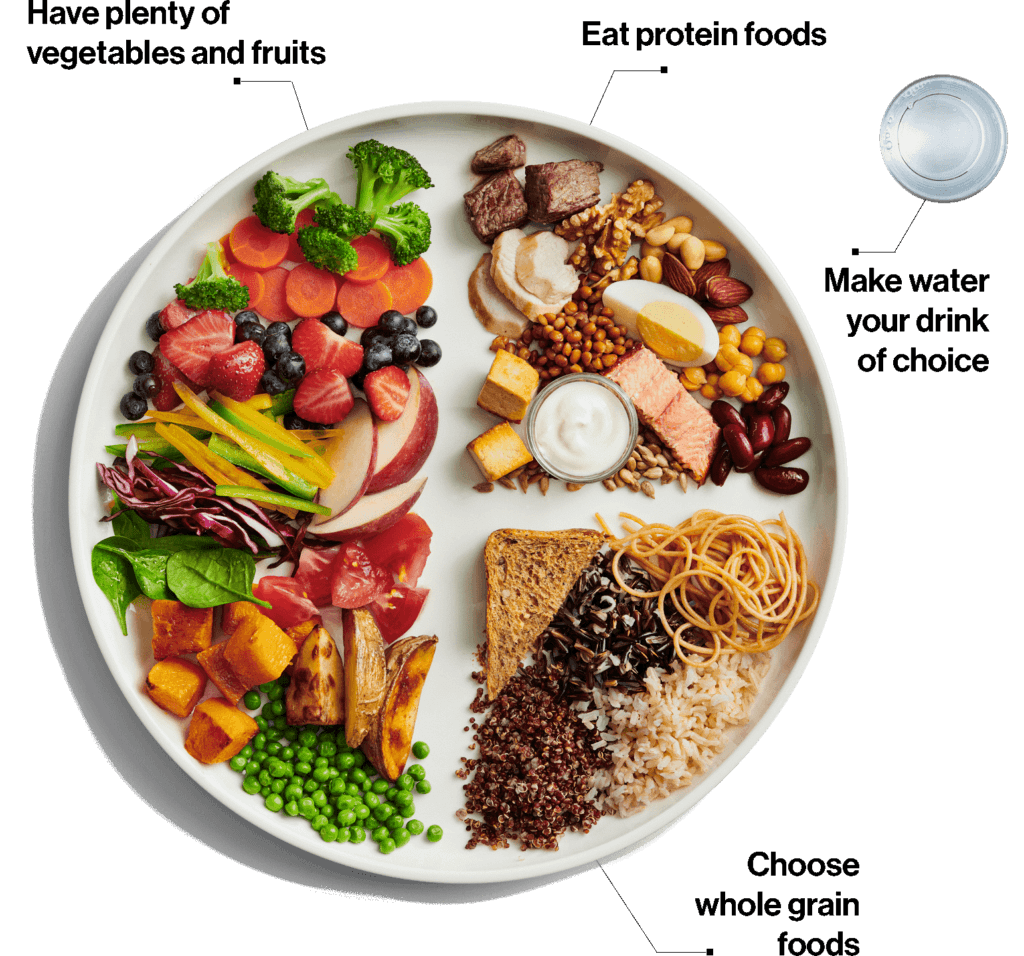
Understanding macronutrients is helpful, but what does that actually look like on your plate? That’s where Canada’s Food Guide Plate Model comes in.
Think of your plate like a team. Half the plate should be filled with fresh, colourful fruits and vegetables, a quarter should be fuel (carbohydrates and whole grains), and the remaining quarter should be for strength (protein foods). Following this model makes healthy eating simple and straightforward.