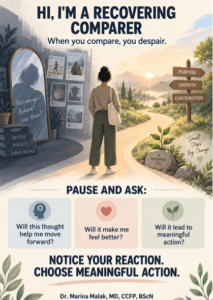

We all hope to reach our full potential in life and live in alignment with our values—whether that means achieving our goals, strengthening our relationships, growing as individuals, or simply finding a greater sense of purpose and fulfillment. While it’s important to show ourselves compassion throughout that journey, many of us find ourselves stuck repeating the same unhelpful patterns, despite genuinely wanting change. Have you ever wondered what gets in the way?
The truth is, our brains are designed to keep us safe, not necessarily to help us grow. They prefer what is familiar and predictable, even when those patterns no longer serve us. As a result, stepping outside our comfort zones, taking healthy risks, or making meaningful changes can feel surprisingly uncomfortable. So when we begin moving toward growth and self-actualization, our minds often push back—encouraging us to stay with what we know- even if what we know is unhealthy- rather than venture into the unknown
Often, the very behaviours that hold us back today once served an important purpose. Avoidance, perfectionism, people-pleasing, emotional shutdown, or excessive self-criticism may have developed as ways to cope with difficult experiences, protect ourselves from pain and rejection, or create a sense of control during stressful periods of life. While these strategies may have been helpful at one time, they can become limiting when they continue long after the original threat has passed.
This is why insight alone is not always enough to create change. Even when we recognize that a pattern is no longer serving us, letting it go can feel uncomfortable because it requires stepping into uncertainty. Growth often involves tolerating temporary discomfort, challenging familiar habits, and responding to ourselves with curiosity rather than judgment.
The good news is that awareness is the first step. By understanding the purpose behind our patterns, we can begin making conscious choices that align with who we are today rather than who we needed to be in the past. Meaningful change rarely happens all at once, but with self-compassion, patience, and support, it is possible to create new ways of thinking, feeling, and relating to ourselves and others
Carol Mansour, Registered Psychotherapist (Qualifying)