
Whether you’re into fitness or not, you’ve probably heard of creatine at some point. It’s one of those supplements that seems to come up everywhere — in gym circles, wellness content, and more recently in conversations about brain health and aging. But with so many claims floating around,
it’s worth asking: what does the science actually say?
So, what even is creatine?
Your body actually makes creatine on its own, and you also get small amounts of it from eating meat and seafood. Its main job is to help your cells produce energy — specifically a molecule called ATP, which is basically the fuel your body runs on. Think of ATP like a rechargeable battery. Creatine helps recharge that battery faster, so your cells, whether in your muscles or your brain can keep working when they’re under demand.
Most of your body’s creatine lives in your muscles, with a smaller amount stored in the brain. When you supplement with it, you’re essentially topping up those stores beyond what your diet and body alone can provide — typically by about 20–40%.
Who can benefit from taking it?
This is where creatine gets interesting, because the research covers a pretty wide range of people.
For anyone who exercises, the evidence is strong. Studies consistently show that creatine helps improve strength and muscle gains, particularly when combined with resistance training. It’s not a magic pill….. you still have to put in the work but it’s one of the few supplements where the science genuinely backs up the hype.
For older adults, creatine is increasingly being recognized as a useful tool for maintaining muscle mass and strength as we age. Losing muscle as we get older is a natural process, but it’s one with real consequences for independence and quality of life — and creatine, combined with staying active, has shown meaningful benefits in slowing that down.
On the brain health side, research is still developing. Some studies suggest it may support memory and attention, particularly under conditions of mental fatigue or sleep deprivation. That said, the evidence isn’t as clear-cut as it is for physical performance, it’s promising, but it’s not a cognitive miracle supplement just yet.
One group worth highlighting: if you don’t eat meat or seafood, your baseline creatine levels are likely lower than average. That means you may notice a bigger difference from supplementing than someone who regularly eats animal products.
For most healthy adults over 18, creatine is considered safe and well-tolerated. If you’ve heard concerns about it being hard on your kidneys, that’s a common myth. Decades of research show it doesn’t cause kidney damage in healthy people at recommended doses. That said, if you have any existing health conditions, it’s always a good idea to check with your doctor before starting anything new.
What type should I buy?
Keep it simple: creatine monohydrate. It’s the most researched form, the most affordable, and despite what some marketing might suggest, the fancier versions don’t offer any proven advantage over it.
How much do I take?
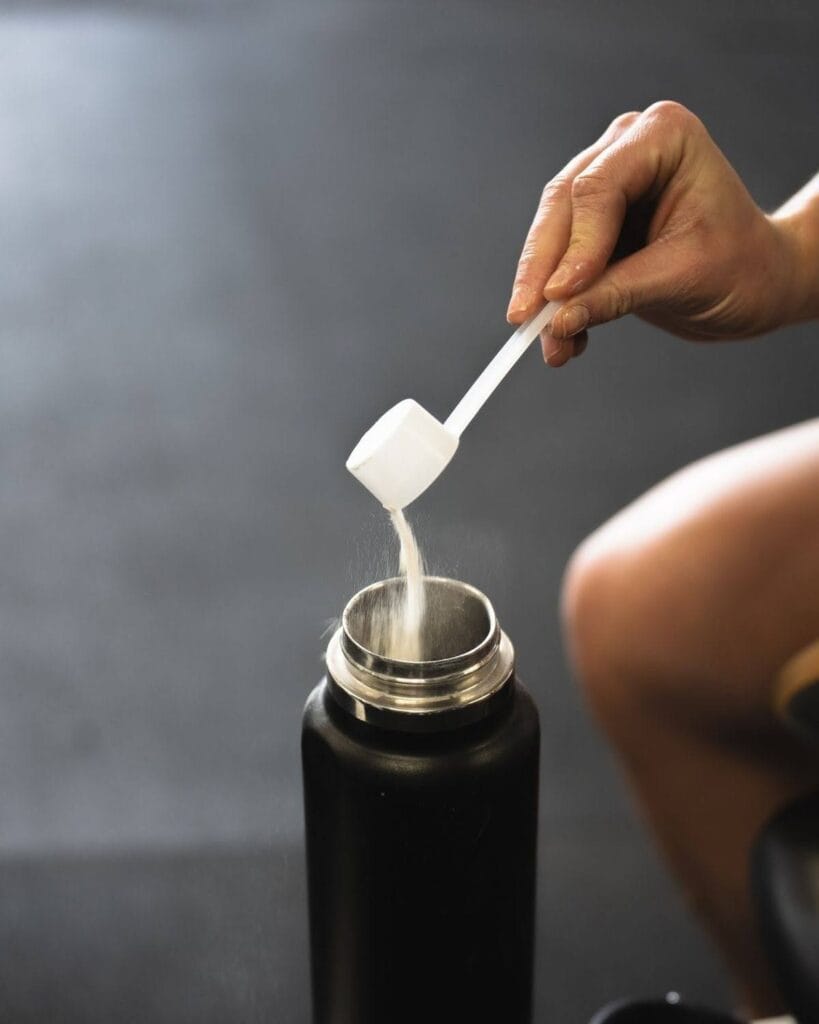
3–5 grams per day is the sweet spot — it’s well-studied, effective, and safe for long-term use. You don’t need to do a “loading phase” (where some protocols suggest taking large amounts for the first week). Loading isn’t harmful, but it’s not necessary either. A consistent daily dose gets you to the same place in about 3–4 weeks.
You also don’t need to cycle off creatine. The old advice about taking breaks every few months isn’t supported by current research, daily use at normal doses is fine to maintain indefinitely.
Timing doesn’t matter much either. Take it whenever it fits your routine — with a meal, before a workout, after, or just mixed into a morning drink. Consistency is what counts.