
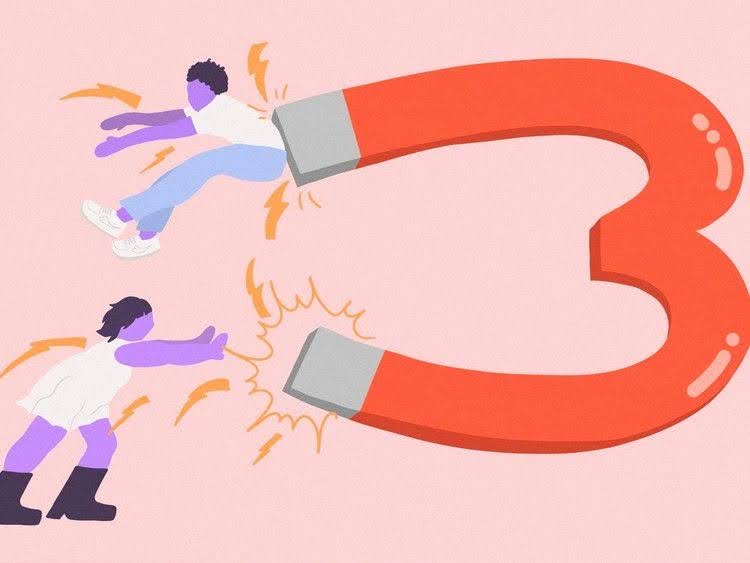
It’s past midnight and you are spiralling because your boyfriend fell asleep before saying goodnight. Your chest feels tight, you feel like crying, and your mind jumps to ten different explanations. Instead of considering he may have accidentally fallen asleep, you start wondering if he fell out of love or if you are not good enough for his affection.
You start getting to know someone new and everything feels easy at first. But as the connection deepens, something shifts. You notice yourself getting overwhelmed by the emotional closeness and begin to pull away. You feel safer at a distance, where you don’t have to be vulnerable or relied on, even if part of you still wants connection.
Do these experiences feel familiar? Have you ever wondered why you seem to end up in the same unhealthy relationship patterns with different partners or friendships? Exploring your attachment style can help make sense of these reactions.
Attachment theory, developed by John Bowlby and Mary Ainsworth, suggests that early relationships with caregivers shape how we relate to others. These early bonds act as a blueprint for how we understand closeness, trust, and emotional safety. Children rely on caregivers not just for physical needs, but for comfort and reassurance.
When caregivers are warm, responsive, and emotionally available, children learn that their needs matter and that others can be trusted, supporting secure attachment. In contrast, when care is inconsistent or unresponsive, insecure attachment patterns may develop. This is not always due to neglect, but often reflects caregivers doing their best under stress or limitation.
Over time, these early experiences influence how safe, valued, and supported we expect to feel in relationships, often shaping patterns that feel automatic in adulthood and hard to break. Recognizing these patterns is the first step toward change, allowing you to respond differently and build more secure and fulfilling connections over time with intention.
Carol Mansour – Registered Psychotherapist (Qualifying)
References
Bacha, Y., & Farouk, S. (2024). Attachment theory: Understanding the impact of early relationships on adult life. Elkhitab Journal of Humanities.
Chopik, W. J. (2023). Attachment security and how to get it. Social and Personality Psychology Compass, 17(3), e12763. https://doi.org/10.1111/spc3.12763
Métellus, S. (2025). Attachment anxiety and relationship satisfaction in the digital age. Journal of Social and Personal Relationships. Advance online publication.
Morris, A. M. (2025). Attachment classification, emotion regulation, and defense mechanisms: A contemporary synthesis. Frontiers in Psychology, 16, 12691835. https://doi.org/10.3389/fpsyg.2025.12691835
Notsu, H., et al. (2025). An updated meta-analysis of the relation between attachment insecurity and therapeutic alliance. Psychotherapy Research. Advance online publication. https://doi.org/10.1080/10503307.2024.2370344
Ren, Q., Topakas, A., & Patterson, M. (2024). Attachment and self-regulation in the workplace: A theoretical integration. Frontiers in Psychology, 15, 1387548. https://doi.org/10.3389/fpsyg.2024.1387548
Sagone, E., & De Caroli, M. E. (2023). Attachment styles and psychological well-being in adulthood. International Journal of Environmental Research and Public Health, 20(6), 4862. https://doi.org/10.3390/ijerph20064862